Morse Code Bracelet: The DIY Guide
Why Morse Bracelets Work So Well
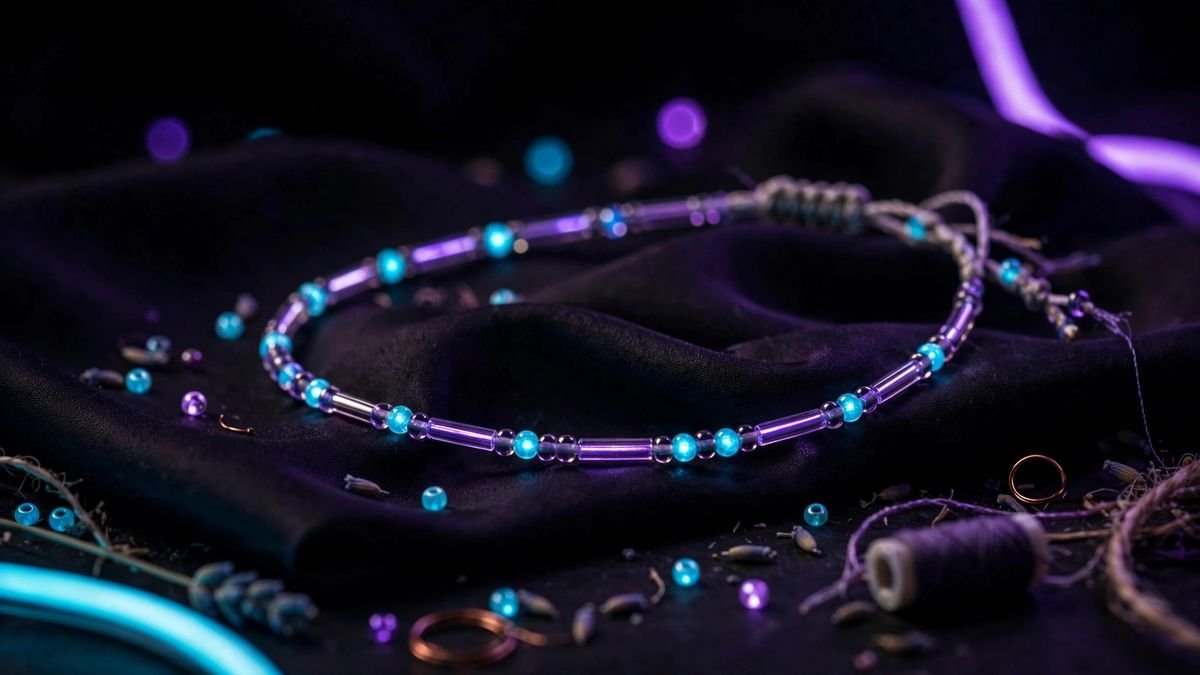
A morse code bracelet is a secret message you wear on your wrist: a name, a word, or a short phrase translated into beads, where round beads are dits (dots) and long tube beads are dahs (dashes). To everyone else it is just a pretty pattern. To you — and anyone you teach the trick — it reads loud and clear.
The idea took off because it solves the classic handmade-gift problem: personal without being cheesy. A bracelet spelling .-.. --- ...- . (LOVE) carries a real message in a form that never needs explaining unless you want it to. It is quiet, it is clever, and it costs almost nothing to make.
You do not need jewelry experience, either. If you can thread beads on a cord and tie a knot, you can make one of these in under half an hour. This guide covers the bead key, how to count beads for any word, a full worked example, and gift ideas — plus how to double-check your pattern against the morse code alphabet before you commit.
Picking Your Word: Short Wins
Word choice is the whole design. The sweet spot is 3 to 6 letters: long enough to mean something, short enough to fit a wrist comfortably and keep the bead count sane. Classic picks include LOVE, HOPE, BRAVE, a name, initials, or a significant date in words.
Longer phrases are possible — .. / .-.. --- ...- . / -.-- --- ..- (I LOVE YOU) makes a stunning piece — but every extra letter adds beads and wrist length, so measure twice. As a rule of thumb, count roughly 4–5 beads per letter including spacers, and compare against your wrist size before you start stringing.
- Names — the most gifted variant; check the spelling twice.
- LOVE / HOPE / BRAVE — timeless, and the patterns look great.
- Initials — compact, subtle, great for matching sets.
- Inside jokes — one word only the two of you understand.
Whatever you choose, generate the pattern first with our morse code generator — type the word, copy the dots and dashes, and you have your beading blueprint with zero transcription errors.
The Bead Key: Dots, Dashes, and Spacers
The system is beautifully simple, and the whole bracelet hangs on keeping it consistent:
- Dit (dot) → one small round bead.
- Dah (dash) → one elongated tube or bugle bead, clearly longer than the round ones.
- Between letters → one spacer bead (a tiny metal or contrasting bead) so the letters do not run together.
- Between words → two spacers, or a slightly larger feature bead.
The contrast between round and tube beads is what makes the code readable, so pick shapes that are unmistakably different at a glance — a round seed bead next to a long bugle bead reads instantly, while two similar ovals will blur together. Color is up to you: classic metallics, birthstone colors, or pride-flag palettes all work, as long as dot-beads and dash-beads stay visually distinct.
... --- ... (SOS) — and hold it at arm’s length. If you can still tell dots from dashes, your bead choice works. If not, increase the size or shape contrast before stringing the whole word.Counting Beads: a Worked Example
Let’s bead the word LOVE — .-.. --- ...- . — step by step, so you see exactly how counting works:
- L =
.-..→ dot, dash, dot, dot → 3 round + 1 tube - O =
---→ dash, dash, dash → 3 tubes - V =
...-→ dot, dot, dot, dash → 3 round + 1 tube - E =
.→ 1 round
Add it up: 7 round beads (the dits) + 5 tube beads (the dahs) + 3 spacer beads (one between each pair of letters) = 15 beads on the cord. That is the entire shopping list for a LOVE bracelet, and you can lay the beads out in order on the table before stringing a single one — the oldest quality-control trick in beading.
Feeling ambitious? .. / .-.. --- ...- . / -.-- --- ..- (I LOVE YOU) works out to 12 round + 12 tube + 7 spacers = 31 beads. Same method, bigger statement. For any other word, the printable morse chart kept beside your bead tray makes counting fast and error-free.
Stringing Step by Step
You need: elastic stretch cord (the standard for bracelets), your counted beads, scissors, and a dab of clear glue or nail polish for the knot. Total cost is typically a few dollars if you already own no supplies at all.
- 1. Cut generously. Wrist circumference plus at least 4 inches of working room — you need slack to tie the knot.
- 2. Pre-string a stopper. Tape one end or clip a binder clip on so beads do not slide off while you work.
- 3. String in code order. Lay out your counted sequence and thread it exactly: letter beads, spacer, letter beads, spacer, and so on.
- 4. Test the fit. Wrap the strung cord around your wrist before knotting — it should slide on comfortably with a little ease.
- 5. Knot like you mean it. A surgeon’s knot (an extra pass through the loop), pulled tight, with a tiny dot of glue. Stretch bracelets live or die by the knot.
- 6. Trim and hide. Cut the tails short and tuck the knot inside a neighboring bead.
Before step 3, read your planned sequence back like a message: point at each bead group and say the letter. This two-minute check catches the overwhelmingly common error — a skipped dot that turns one letter into a different one — while it is still fixable.
Gift Ideas and Occasions
A morse bracelet lands differently from store-bought jewelry because it contains a deliberate secret. Some occasions it was practically invented for:
- Anniversaries —
../.-..---...-./-.-----..-(I LOVE YOU), or the couple’s initials. - Friendship — matching bracelets with the same word, or complementary halves of a phrase.
- Graduation —
--.....-.-(GIFT)? Better: the graduate’s new title, or BRAVE. - Long distance — one word that means “us,” worn daily until the reunion.
- New parents — the baby’s name, beaded while waiting for the arrival.
Presentation tip: include a small card showing the word in dots and dashes, so the recipient can decode it themselves — half the delight is the moment of discovery. If jewelry is becoming a theme, our morse code tattoo and jewelry guide covers necklaces, anklets, and permanent-ink versions of the same idea.
Care, Sizing, and Variations
Measure the wrist snugly with a soft tape and add about half an inch for comfort — stretch cord needs that ease or the bracelet will strain at the knot. Restrung once a year (or when the elastic loosens), a beaded bracelet lasts indefinitely; keep it out of pools and off the shower shelf, since chlorine and elastic are not friends.
Once the basic technique clicks, the variations are endless. Scale the same code up into a necklace with larger beads, shrink it into an anklet, or bead a keychain with a single initial. Some makers alternate two full words separated by a feature bead — a name on one side, a date-word on the other. The code does not care what it is strung on.
And if you fall in love with the concept, the rabbit hole goes deep: morse shows up in tattoos, engraved rings, cross-stitch, and even garden stepping stones. Whatever form your message takes, the discipline is the same — verify every letter against a trusted chart before you make it permanent. Beads can be restrung; tattoos cannot.
Frequently asked questions
Which beads represent dots and dashes in a morse code bracelet?
The standard convention is small round beads for dots (dits) and elongated tube or bugle beads for dashes (dahs), with a small spacer bead between letters so the code stays readable.
How many beads do I need for a name bracelet?
Roughly 4 to 5 beads per letter including spacers. A 4-letter word like LOVE needs exactly 15 beads (7 round + 5 tube + 3 spacers). Count your specific word letter by letter before buying supplies.
What kind of cord should I use?
Clear elastic stretch cord is the standard choice — it makes a bracelet that slips on without a clasp. Cut it several inches longer than the wrist measurement so you have room to tie a secure surgeon’s knot.
How do I make sure my pattern is correct?
Generate the word with a morse converter, lay the beads out in order on the table, and read the sequence back letter by letter before stringing. Checking against a printed chart takes two minutes and prevents a misspelled wrist.
Is a morse code bracelet a good gift?
It’s an excellent one — personal, handmade, inexpensive, and it hides a message only the wearer (and whoever they tell) can read. Include a small card showing the dots and dashes so the recipient can decode it.
Try It Live
Reading is step zero — hearing is the real thing. Type any text into the free morse code translator and play it back, or drill your new skills in the trainer.